My Journey Through Teyvat: Looking Back at Genshin Impact's Explosive Growth and the Arrival of Inazuma
Explore the phenomenal rise of Genshin Impact, a game that captivated over 40 million players with its immersive world of Teyvat. Discover how its relentless six-week update cycle, including the electrifying Inazuma expansion and the pivotal Kazuha banner, forged an unbreakable bond with its community.
As I log into Genshin Impact today in 2026, it's almost surreal to think about how this world has grown around me. Last year, the gaming landscape was packed with big releases, each vying for our attention. Yet, amidst that fierce competition, it was this very game, this sprawling world of Teyvat, that rose to the top and captured the hearts of over 40 million players by year's end. I remember the buzz, the shared excitement in every forum and chat. We weren't just playing a game; we were part of a phenomenon that was redefining what a live-service adventure could be.
What truly kept me, and millions of others, hooked was the relentless pace of new adventures. When it comes to consistent, meaningful updates, few games can match Genshin Impact's rhythm. A new update every six weeks – it became a calendar event in my life. Just as I'd start to feel I'd seen every corner of a region, a new patch would drop, bringing fresh stories, challenges, and secrets to uncover. That constant stream of content wasn't just impressive; it built a unique relationship between the developers and us, the travelers. We always had something on the horizon, a new reason to gather with friends and explore.
The anticipation for what was then called the 1.7 Update was a palpable electricity in the community. Rumors had swirled for months, whispers carried by the wind from distant shores. And then, the confirmation we'd all been waiting for: Inazuma. The Electro Archon's realm, a land of eternal lightning and strict order, was finally opening its borders. I can still recall the collective gasp across social media. This wasn't just another area; it was the fulfillment of a long-held promise, a major new chapter in our journey. The fan art, the theories, the sheer hype – it was a beautiful chaos.
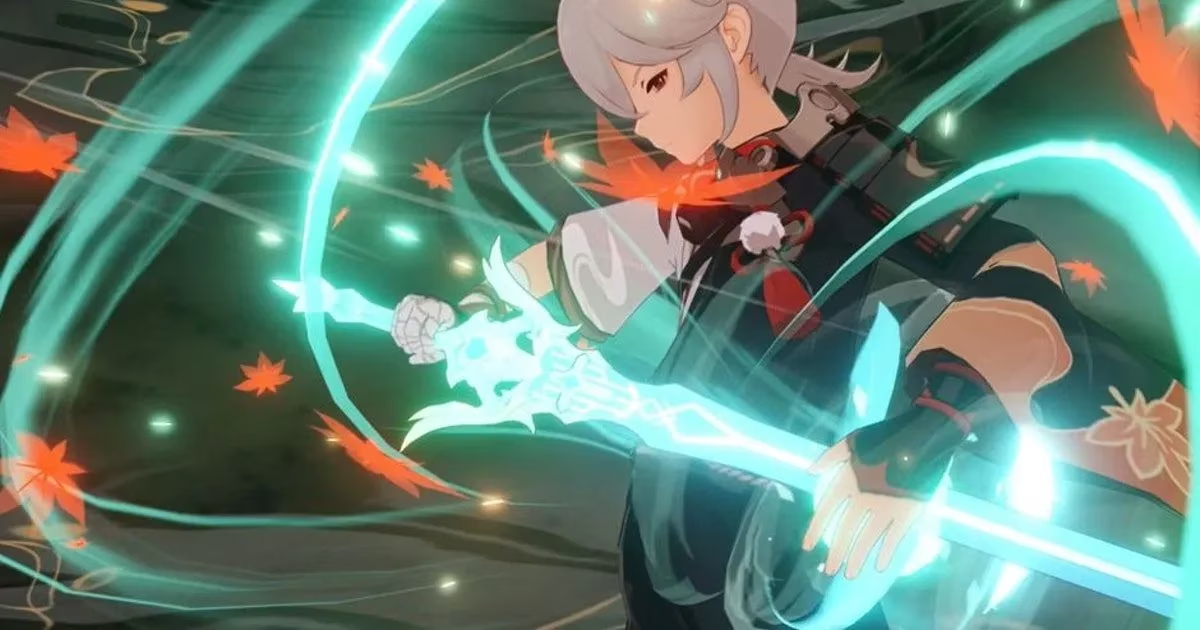
Of course, a new nation meant new faces to join our party. The update cycle leading into Inazuma was a masterclass in building excitement. The 1.6 update had introduced us to the wandering samurai, Kaedehara Kazuha, whose calm demeanor and Anemo powers hinted at the stormy region to come. The leaks surrounding his banner were a community event in themselves. Trusted sources like Lumie suggested his banner would feature Rosaria, Bennett, and Razor. While we always took such leaks 'with a grain of salt,' as the saying went, the history of accuracy made the speculation feel like part of the fun. Would Bennett's incredible luck finally bring me that coveted C6? The discussions were endless.
Looking back from 2026, that period marked a turning point. The Kazuha banner, which went live on June 29th all those years ago, was more than just a character release. It was the final piece of the puzzle before the great voyage east. The Klee banner rerun that preceded it felt like a fond farewell to the familiar lands of Mondstadt and Liyue. We were stocking up on resources, preparing our teams, and sharing strategies for the challenges we imagined awaited us in the land of the Raiden Shogun. The game's model of predictable, six-week updates created a wonderful cadence of anticipation, discovery, and mastery.
🌟 The Pillars of Genshin's Success (A Traveler's Perspective):
-
Reliable Rhythm: The six-week update cycle wasn't just a schedule; it was a promise. It gave structure to our adventures and guaranteed that the world never grew stale.
-
Expansive World-Building: The arrival of Inazuma showed miHoYo's commitment to truly expanding the map, not just adding dungeons. Each region felt like a wholly new world with its own culture, conflicts, and aesthetic.
-
Community as a Character: The shared experience of leaks, speculation, and discovery made the player base feel like an active participant in the story's unfolding, not just a passive audience.
-
Strategic Hype: Introducing characters like Kazuha before the region they hailed from was a brilliant narrative and marketing move. It created personal guides into the new world.
The journey from those days of anticipating Inazuma to the present, where we've explored Sumeru's deserts, Fontaine's courts, and beyond, has been incredible. The game that captivated 40 million players by the end of last year has only deepened its world and refined its craft. Those early updates set a standard—a promise of consistent growth and surprise that, I'm happy to say, has been kept. As I set sail today for the latest region, I do so with the same thrill I felt waiting for the shores of Inazuma to appear on the horizon. The world of Teyvat keeps turning, and I, like so many others, am forever grateful to be traveling through it.