The Tale of Genshin Impact’s Storytelling Method Quest: From Mystery to Masterpiece
Genshin Impact's once-elusive Storytelling Method quest finally unlocked, sending Travelers to help novelist Junkichi overcome writer's block.
Back in the autumn of 2021, the winds of Teyvat carried more than just the scent of Sakura Blooms. Genshin Impact version 2.1 had landed, and with it came the new islands of Watatsumi and Seirai, along with a boatload of quests that had Travelers buzzing. Among the sea of content, one world quest in Inazuma caught the keen eyes of completionists: the Storytelling Method. But as many adventurers quickly discovered, triggering it turned into a saga of its own.
The rumor mill started spinning when players noticed the quest’s name in their in-game checklists, yet any attempt to kick it off was met with dead air. It was like chasing a phantom. Forums lit up with theories faster than you could say “Primogem,” and the community collectively scratched their heads. The official line, or rather the lack thereof, only added fuel to the fire. Some sharp-eyed veterans pointed out that the Storytelling Method smelled a lot like a sequel to the already infamous “Is This Novel Amazing?” quest, which featured the perpetually stressed NPC Junkichi, a novelist wrestling with a classic case of writer’s block. The logic was solid: a guy who can’t meet deadlines would naturally be tangled up in another narrative-themed quest, right? After all, the apple doesn’t fall far from the tree.
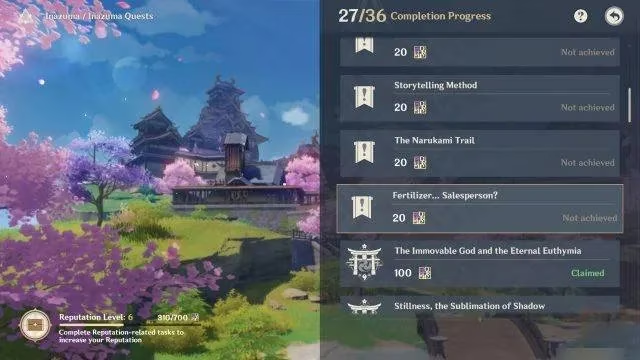
But as the days rolled on, the devs kept their cards close to their chest. The Storytelling Method, alongside other ghosts like The Narukami Trail and Fertilizer Salesperson, remained stubbornly out of reach. Seasoned players recognized this pattern — miHoYo, now HoYoverse, was infamous for drip-feeding content, letting world quests trickle into the game like a slow-brewed cup of coffee. So, the community hunkered down, knowing full well that patience was the name of the game.
Fast-forward a few patches, and the wait paid off in spades. When the Storytelling Method finally dropped, it wasn’t just a checkbox on a list; it was a narrative gem that had Junkichi written all over it. The quest threw Travelers into a whimsical yet heartfelt mission, blending the art of storytelling with classic fetch-and-deliver beats. Junkichi’s writer’s block had evolved into a full-blown crisis, and it was up to the player to help him gather inspiration from all corners of Inazuma. The writing was so on point that even the most hardened meta-chasers found themselves pausing to read the dialogue — a real testament to the quest’s charm.
By 2026, looking back, the hoopla around the Storytelling Method feels like a distant memory. But it’s a textbook example of how the Genshin community turns a simple missing quest into a full-blown detective case. The quest itself has since become a beloved piece of Inazuma’s lore, often cited by fans as one of the most “slice-of-life” yet meaningful side stories in the game. Junkichi, once a forgettable NPC, rode that momentum into fan art and even a cheeky cameo in later events. It’s funny how things shake out: from being a source of frustration to a fan favorite, the Storytelling Method wrote its own story in the history of Teyvat. And hey, if there’s one thing the Traveler knows, it’s that every good tale deserves to be told — even if it takes a couple of patches to get there.